At the Permaculture Learning Center Bali Jiwa Garden, environmental education took on an engaging twist with the use of ecogames.net’s Alami Garden Adventure Cards. At the Community Classroom “Balai Belajar,” kids enjoyed hours of exploration and discovery within the garden. The Alami Garden Adventure Cards offer an exciting way for children of all ages to connect with nature and embark on a treasure hunt within the garden. With 36 cards featuring visual and written clues, players are challenged to discover fascinating natural wonders based on the provided hints. Alami Garden Adventure Cards combine Adventure with environmental education. As they explored the garden, observed different patterns, sounds, and forms found in nature, participating kids identified natural wonders and developed a deeper personal connection with the environment. This game fosters curiosity, encourages a greater understanding of the natural world around, and promotes a sense of stewardship and respect for the natural resources in our surroundings. Jiwa Garden, known for its commitment to permaculture, composting, market gardens, fruit trees, and free-range chickens, is not just a garden. It’s a vibrant hub for the community that offers a multitude of experiences, including workshops, community kitchens, live music nights, and much more. Central to Jiwa Garden’s mission is its Community Classroom “Balai Belajar,” where kids and adults alike come together to learn and grow. Balai Belajar, Indonesian for “Learning Space,” is a testament to Jiwa Garden’s commitment to community learning. Supported by dozens of donors, supporters, and volunteers, it serves as a space for people of all ages to expand their knowledge. Jiwa Garden hosts workshops and courses on various topics, including permaculture, gardening, composting, and sustainable food production. Additionally, they actively involve local public schools, homeschooling groups, and other initiatives to emphasise the importance of youth in regenerative agriculture. Jiwa Garden recognizes the pivotal role that Bali’s youth plays in addressing environmental challenges, such as soil and water health, food security, and waste management. They are dedicated to creating awareness among the younger generation about the natural world and the importance of environmental stewardship. Jiwa Garden reinvests part of the proceeds generated from paid courses and workshops into the community, allowing less fortunate local communities and public school groups to attend events at Jiwa Garden at no cost. Jiwa Garden’s commitment to community learning and environmental awareness aligns perfectly with the mission of ecogames.net, building partnerships that benefit future leaders and the environment they live in. Alami Garden Adventure Cards are versatile, and suitable for various settings. Whether it’s a family outing in the garden, an outdoor party, or a classroom learning session, these cards provide an educational experience that combines entertainment with outdoor exploration. Their compact and portable nature allows for spontaneous adventures, while the gameplay lasts 15 minutes or more (some can play for many hours!) Alami Garden Adventure Cards ensure engaging and immersive experiences for kids of all ages. #ClassroomEnvironmentGames #SchoolsEnvironmentalEducation #TeachEcoSolutions #EcoFriendlyOutdoorGames #EcoConsciousKidsGames #EnvironmentalEducationActivities #FunEcoFriendlyGames #FunEcoFriendlyActivities #HandmadeInBali #HandcraftedInBali #StorytellingGames #StrategyForChangeGames #GiantGamesforGroups #GamesAboutOceanConservation #PlasticPollutionAwareness #OceanCleanUp #FindMeInTheGardenGames #PermaculturePlay #SDGsforChangeEducation #SmallIslandsBigImpact #TeachingPlanetaryBoundaries #CommunityResilienceGames #RainforestLearning
More-

Ecogames at Bali’s Jiwa Garden Permaculture Center: Engaging Environmental Education
-

Ecogames.net joins Arka Kinari’s Cultural Voyage to Sound the Environmental Alarm
In a world confronted by the pressing challenges of climate change and environmental degradation, a unique vessel named Arka Kinari emerges as an iconic beacon of truth. This 70-ton sailing ship, launched by the visionary artists Filastine and Nova, represents a commitment to defending and preserving our planet’s fragile ecosystems. Arka Kinari is delivering a cultural odyssey, blending music, message, and eco-consciousness to inspire change. During its Jawa tour Arka Kinari made use of EcoGames,net games for environmental education, supporting its mission to promote and build awareness about the critical state of our world’s environment. Building environmental understanding and awareness in remote island communities, especially with children, can be a daunting task. For the Arka Kinari crew, ecogames.net Octoputs & MuZe Cubes games were really helpful, as children found new ways to connect, particularly in the coastal Pesantren schools where maritime life and climate change education are paramount. Children who were invited to visit the vessel not only enjoy the games but also gain valuable insights into the importance of preserving our oceans and combating climate change. By day, Arka Kinari serves as a cultural platform, hosting workshops, skill-sharing sessions, and intimate concerts featuring local musicians. By night, the ship undergoes a mesmerizing transformation into a stage for Filastine & Nova’s captivating performance. Their fusion of traditional Javanese melodies with contemporary electronic music serves as a powerful alarm call for the climate crisis, accompanied by cinematic visuals that envision a post-carbon future. Remote island communities hold a special place in Arka Kinari’s heart, as they are often the most vulnerable to the effects of climate change and environmental degradation. Here, the Octoputs & MuZe Cubes games take on even greater significance. As children on these isolated islands engage with this educational game, they not only share knowledge about marine life, plastic pollution and climate change. Playing Octoputs & MuZe Cubes fosters teamwork and collaboration. This cooperative aspect of the game instils values of community and shared responsibility, which are vital for these isolated societies facing unique environmental threats. As children interacted with Arka Kinari’s crew and maritime network relationships that the vessel rekindled, they gained exposure to diverse cultures, languages, and ideas. This exposure broadens their horizons and reinforces the importance of global cooperation in protecting our planet. Here is some more information about Arka Kinari’s Mission Arka Kinari’s slow tour is a revival of the maritime network that once served as the original internet, connecting diverse peoples, languages, and ideas. This extraordinary vessel retraces disappearing trade routes, carrying culture as its cargo to rekindle the connection between communities and their waterfronts. Arka Kinari’s maiden voyage took it through twenty-three nations, spanning the Atlantic, Caribbean, and even the challenging Panama Canal. The vessel’s arrival in Indonesia in September 2020 marked a triumphant return to its home waters, where it now explores the spice routes of the archipelago. As part of its mission, Arka Kinari hosts “Laut Loud,” a series of small online streaming concerts that celebrate the diversity of Indonesian music. Each episode, curated by guest experts, focuses on artists with a unique connection to the featured location. The inaugural episodes spotlight Bali and are curated by Gabber Modus Operandi. Arka Kinari extends its warm embrace to artists and researchers whose work is intertwined with the seas, places, or communities they encounter during their voyage. The residency program places a special emphasis on supporting Indonesian women, providing them with an opportunity to connect with sailing life and explore remote islands. Arka Kinari offers skill-sharing workshops that cover various aspects of sustainable living. These workshops include learning essential maritime skills such as knot-tying and sail training, innovative cooking using local ingredients and spices, and an introduction to renewable energy systems, including solar and wind technologies. Arka Kinari, with its rich history and transformative mission, stands as a symbol of hope and environmental consciousness. Through its innovative use of EcoGames, dynamic performances, and a commitment to sustainability, Arka Kinari inspires individuals of all ages to become stewards of our planet. As it continues to journey through the Indonesian archipelago, Arka Kinari leaves a trail of positive change and serves as a testament to the power of art and culture in addressing the challenges of our time. #ClassroomEnvironmentGames #SchoolsEnvironmentalEducation #TeachEcoSolutions #EcoFriendlyOutdoorGames #EcoConsciousKidsGames #EnvironmentalEducationActivities #FunEcoFriendlyGames #FunEcoFriendlyActivities #HandmadeInBali #HandcraftedInBali #StorytellingGames #StrategyForChangeGames #GiantGamesforGroups #GamesAboutOceanConservation #PlasticPollutionAwareness #OceanCleanUp #FindMeInTheGardenGames #PermaculturePlay #SDGsforChangeEducation #SmallIslandsBigImpact #TeachingPlanetaryBoundaries #CommunityResilienceGames #RainforestLearning
More -
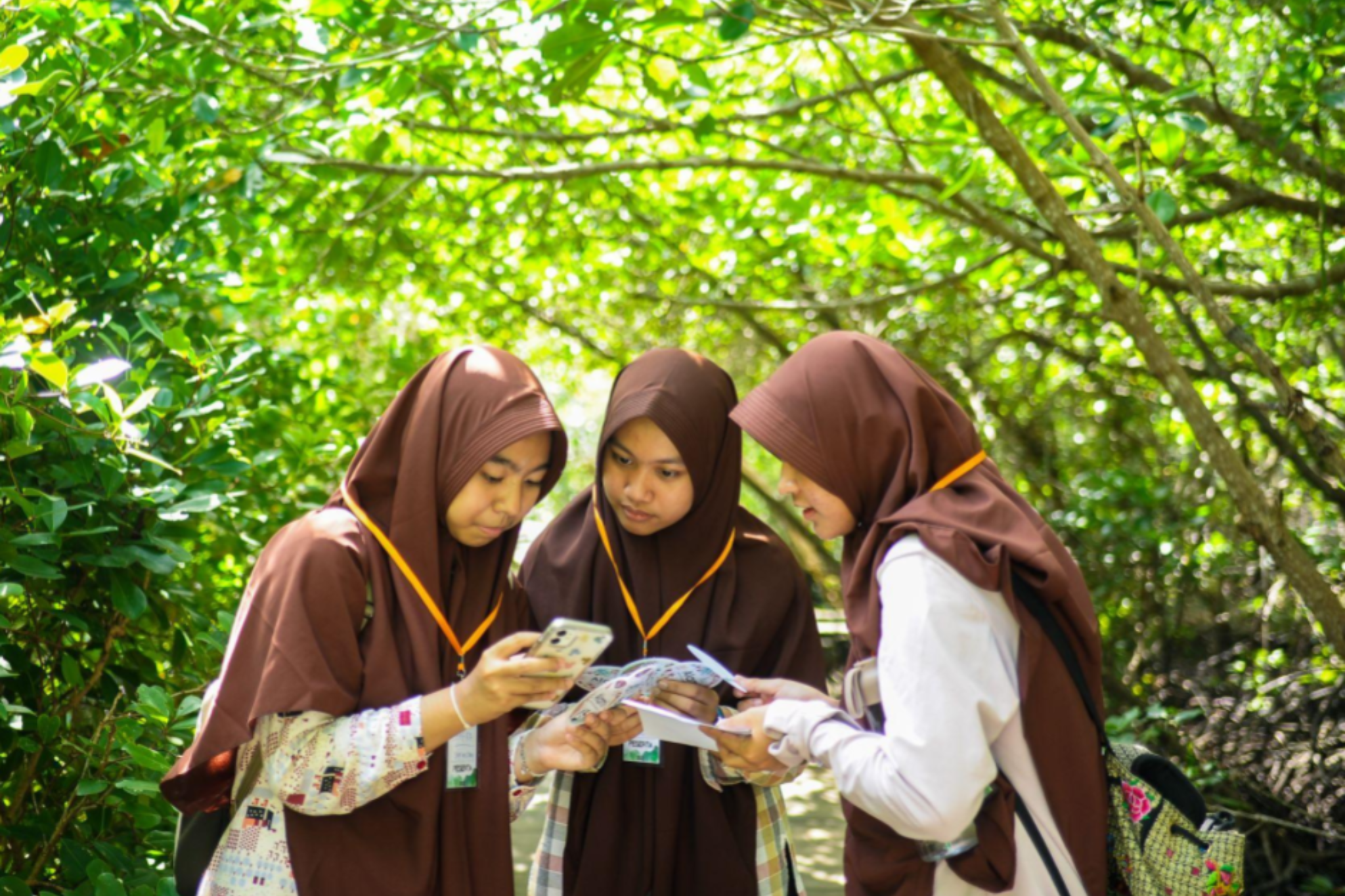
EcoGames.net helps with student engagement at Bali’s Mangrove Festival
Bali, with its stunning beaches and lush landscapes, is known for its natural beauty. However, the island’s ecological diversity extends beyond its shores to its mangrove forests. These mangroves play a crucial role in supporting local ecosystems and combating climate change. To celebrate and raise awareness about these unique ecosystems, the Ministry of Environment and Forestry, Kementerian Lingkungan Hidup dan Kehutanan (KLHK), organised the Mangrove Festival 2023, commemorating the International Day for the Conservation of the the island’s precious Mangrove Ecosystem. The Mangrove Festival, held in Bali around the Mangrove Information Center (MIC), Taman Hutan Raya Ngurah Rai, on July 28th and 29th, 2023, aimed to educate and inspire people from various backgrounds, including government, private sectors, academia, youth, and the general public, both locally and internationally. Dyah Murtiningsih, Directorate General of River Basin Management and Forest Rehabilitation (PDAS RH), highlighted the strategic importance of the festival as a platform for various stakeholders to come together. She also praised the involvement of local mangrove activists and regional Mangrove Working Groups from across Indonesia. The festival hosting workshops involving three countries: Indonesia, South Korea, and Brazil. These workshops facilitated the exchange of experiences, knowledge, and best practices in mangrove ecosystem management and environmental conservation, considering climate change as a global issue requiring global support and collaboration. The choice of Tahura Mangrove Forest in Ngurah Rai as the exhibition location was also significant. It showcased successful efforts of the Indonesian government and the Balinese community in rehabilitating the local mangrove ecosystems. This area, once damaged by aquaculture activities, has been transformed into a thriving and well-preserved mangrove forest, spanning over 1,300 hectares. It now houses 33 mangrove species and over 300 wildlife species. The Mangrove Festival was a multi-faceted event that aimed to strengthen environmental awareness and responsibility. One of the highlights of the festival was the integration of ecogames.net products, particularly the Alami Nature adventure cards, into the educational activities. Students and participants had the opportunity to explore the mangrove forest using ecogames.net’s Alami Nature adventure cards and Eco Treasure Nature Hunt game. These games acted as guides, helping students identify, engage with, and better appreciate the unique flora and fauna of the mangrove ecosystem. They turned a simple walk through the mangroves into an exciting adventure filled with discoveries. Many schools enthusiastically participated in the festival, actively engaged with ecogames.net games, which allowed students to connect with nature, enhancing their understanding of the mangrove ecosystem’s importance. Students spent hours playing with ecogames.net products, making the event not only deeply engaging but also highly educational. Through interactive games and activities, students learned about the vital role mangroves play in supporting marine life, stabilising coastlines, and sequestering carbon. The festival also featured an Eco Games competition that challenged participants to explore the mangrove ecosystem using their senses of sight, touch, smell, and hearing. This hands-on experience encouraged them to work together in teams, discuss their findings, and present their discoveries to the judges. The festival’s closing ceremony was a celebration of both environmental awareness and action. It included the planting of mangrove trees and the announcement of the Eco Games competition winners. Students from various schools actively participated in the competition, demonstrating their newfound knowledge about mangroves. For the high school category, SMAN 2 Kuta Selatan emerged as the winner, scoring 146 points. Meanwhile, in the junior high school category, SMP Insan Mulia Bali claimed victory with 138 points. Additionally, SMAN 10 Denpasar received the title of “Audience and Jury Favorite.” The Mangrove Festival in Bali provided a unique platform for people of all ages to connect with and learn about the importance of mangrove ecosystems. Ecogames.net helped make this educational experience both enjoyable and enlightening for students. Through interactive games and activities, students deepened their appreciation for the vital role mangroves play in our environment. As we celebrate the conservation of mangroves on the International Day for the Conservation of the Mangrove Ecosystem, let us remember the significance of these coastal guardians and the vital role they play in our planet’s health! #ClassroomEnvironmentGames #SchoolsEnvironmentalEducation #TeachEcoSolutions #EcoFriendlyOutdoorGames #EcoConsciousKidsGames #EnvironmentalEducationActivities #FunEcoFriendlyGames #FunEcoFriendlyActivities #HandmadeInBali #HandcraftedInBali #StorytellingGames #StrategyForChangeGames #GiantGamesforGroups #GamesAboutOceanConservation #PlasticPollutionAwareness #OceanCleanUp #FindMeInTheGardenGames #PermaculturePlay #SDGsforChangeEducation #SmallIslandsBigImpact #TeachingPlanetaryBoundaries #CommunityResilienceGames #RainforestLearning
More -

The Pollinator Predicament: Why Their Survival Matters Now & how we can all help
Our world is buzzing with life, thanks to the tireless work of pollinators. These small but mighty creatures, including bees, butterflies, birds, and bats, play a pivotal role in our ecosystem by fertilising plants as they move pollen from one flower to another. However, these unsung heroes of the natural world are facing a multitude of threats that demand our immediate attention. What are the Key Issues Our World’s Pollinators are Facing? Habitat Loss: One of the most significant threats to pollinators is the loss of their natural habitats. Urbanisation, deforestation, and industrial agriculture have led to the destruction of critical pollinator nesting sites and foraging grounds. Pesticides: The use of chemical pesticides, especially neonicotinoids, poses a grave danger to pollinators. These chemicals not only kill pests but also harm beneficial insects like bees. Pesticides can contaminate nectar and pollen, making them toxic to pollinators. Climate Change: Rapid shifts in climate patterns disrupt the delicate synchrony between plants and their pollinators. Changes in temperature and precipitation can affect the timing of flowering and pollinator activity, leading to a mismatch that threatens the survival of both. Disease: Pollinators are susceptible to diseases, including the infamous Colony Collapse Disorder that affects honeybee populations. These diseases can spread quickly within pollinator colonies, decimating their numbers. The decline of pollinators is not a future concern; it’s happening right now, and the consequences are far-reaching. Our food system relies heavily on pollinators. Over 75% of global food crops depend on pollination, including staples like fruits, vegetables, and nuts. The economic value of pollinators’ services is estimated at billions of dollars annually. Moreover, pollinators contribute to biodiversity by facilitating plant reproduction. Their work helps maintain diverse ecosystems, supporting other wildlife and preserving the genetic diversity of plant species. To put the global treat into context let’s look at some key statistics: The loss of pollinators could result in decreased crop yields, increased food prices, and reduced dietary diversity for billions of people. It could also lead to the extinction of plant species, affecting entire ecosystems. How You Can Be Part of the Solution Families, schools, and communities can play a crucial role in pollinator conservation. Here’s how: Plant Pollinator-Friendly Gardens: Whether you have a backyard or a small balcony, you can create a pollinator-friendly oasis. Choose native plants that provide nectar and pollen for bees and butterflies. Avoid using pesticides in your garden Support Organic Farming: Buy organic produce whenever possible. Organic farming practices are less harmful to pollinators because they restrict the use of synthetic pesticides. Educate and Advocate: Raise awareness about pollinator conservation in your community and schools. Encourage local authorities to adopt pollinator-friendly policies, such as planting wildflowers along roadsides. Support Integrated Pollinator Habitats: Enhance your pollinator-friendly garden with a diverse array of nectar-rich flowers that bloom throughout the seasons, ensuring a continuous food source for bees, butterflies, and other pollinators. Incorporate a “bee hotel” nesting site to encourage their presence for ongoing pollination, as well as a “bee bath,” a shallow basin filled with water and pebbles, as a watering station. Protecting pollinators is not just an environmental concern; it’s a matter of food security, biodiversity, and ecosystem resilience. The threats facing these remarkable creatures are urgent, and the time to act is now. By adopting pollinator-friendly practices at home, advocating for change in your community, and supporting organisations working tirelessly to protect pollinators, you can be part of the solution. #ClassroomEnvironmentGames #SchoolsEnvironmentalEducation #TeachEcoSolutions #EcoFriendlyOutdoorGames #EcoConsciousKidsGames #EnvironmentalEducationActivities #FunEcoFriendlyGames #FunEcoFriendlyActivities #HandmadeInBali #HandcraftedInBali #StorytellingGames #StrategyForChangeGames #GiantGamesforGroups #GamesAboutOceanConservation #PlasticPollutionAwareness #OceanCleanUp #FindMeInTheGardenGames #PermaculturePlay #SDGsforChangeEducation #SmallIslandsBigImpact #TeachingPlanetaryBoundaries #CommunityResilienceGames #RainforestLearning
More -

SOS: Our Oceans in Crisis – How We Can Make a Difference?
Our oceans, covering over 70% of Earth’s surface, are not just vast bodies of water but life-sustaining ecosystems crucial to the well-being of our planet. However, they are facing unprecedented degradation, posing severe threats to marine life, coastal communities, and ultimately, all of us. Some of the most pressing issues being faced by our oceans are: Plastic Pollution: Plastic waste has inundated our oceans, with approximately 8 million tons entering them each year. This non-biodegradable material harms marine life, contaminates the food chain, and contributes to the formation of colossal garbage patches, such as the Great Pacific Garbage Patch. Plastic pollution has resulted in over 100,000 marine mammal deaths and more than one million seabird deaths annually. Overfishing: Overfishing is depleting fish populations to unsustainable levels. Around 90% of global fish stocks are either overfished or fully exploited. This jeopardises the livelihoods of millions of people and disrupts ocean ecosystems. Overfishing has led to a decline in large predatory fish populations by 90% since the 1950s. Coral Reef Decline: Coral reefs, often called “rainforests of the sea,” are dying at an alarming rate due to factors like rising sea temperatures and ocean acidification. Approximately 75% of coral reefs are currently threatened. Coral reefs provide habitat for around 25% of marine species, yet 50% of coral reefs have been lost in the last three decades. Ocean Acidification: Increased carbon dioxide (CO2) levels in the atmosphere are absorbed by the oceans, causing them to become more acidic. This negatively affects shellfish, plankton, and other marine organisms with calcium carbonate shells or skeletons. Ocean acidification is occurring at a rate unparalleled in 300 million years, affecting marine organisms like oysters and mussels. Illegal Dumping and Oil Spills: Irresponsible actions by some individuals and industries lead to oil spills and illegal dumping of pollutants, causing catastrophic damage to marine ecosystems. How Pressing Are These Issues? How Can Families, Schools, and Communities Help? Reduce Plastic Usage: Families can reduce single-use plastic consumption by opting for reusable items, schools can initiate plastic reduction campaigns, and communities can organise beach cleanups. Responsible Seafood Choices: By making informed choices about the seafood they consume, families, schools, and communities can support sustainable fishing practices and reduce overfishing. Support Marine Protected Areas: Families can advocate for the creation and expansion of marine protected areas, schools can educate students about their importance, and communities can engage in conservation efforts. Reduce Carbon Footprints: Reducing carbon emissions through energy-efficient practices, adopting clean energy sources, and supporting policies that address climate change can mitigate ocean acidification. Education and Awareness: Schools play a crucial role in educating the younger generation about ocean conservation. Communities can organise awareness campaigns and workshops to mobilise action. There are several ecogames products that can really support such initiatives! Ocean degradation is a pressing issue, but if we act quickly it’s not too late to make a difference. By taking action at the family, school, and community levels, we can be part of the solution. The statistics are alarming, but they should serve as a wake-up call, inspiring us to protect these vital ecosystems for generations to come. The time to act is now. #ClassroomEnvironmentGames #SchoolsEnvironmentalEducation #TeachEcoSolutions #EcoFriendlyOutdoorGames #EcoConsciousKidsGames #EnvironmentalEducationActivities #FunEcoFriendlyGames #FunEcoFriendlyActivities #HandmadeInBali #HandcraftedInBali #StorytellingGames #StrategyForChangeGames #GiantGamesforGroups #GamesAboutOceanConservation #PlasticPollutionAwareness #OceanCleanUp #FindMeInTheGardenGames #PermaculturePlay #SDGsforChangeEducation #SmallIslandsBigImpact #TeachingPlanetaryBoundaries #CommunityResilienceGames #RainforestLearning
More -

Ecogames.net Products Enhance Learning at Kebun Berdaya Community Gardens in Denpasar
At Kebun Berdaya Community Gardens in Denpasar, Bali, there’s a vibrant hub of learning and environmental awareness taking root. The gardens have become a nurturing ground for both young and old, and they have a great ally in ecogames.net products. These educational games help with the community garden’s impact, engaging children in the garden’s mission to empower local kids with environmental awareness. The project was founded with the support from the Bali Live Festival, a spectacular 12-hour online festival featuring 32 renowned artists who all rallied together to give back to Bali in its time of need. The event was attended by thousands and managed to raise over $18,000 for initiating this extraordinary project. These funds were channelled into supporting the Kebun Berdaya Urban Gardens Initiative, a collaborative effort between Kopernik and PT Alam Santi. Kebun Berdaya started as an innovative response to the COVID-19 crisis in Bali, which due to Bali’s almost complete dependency on tourism for local livelihoods, had severe repercussions on food security across Bali. This challenge was extremely poignant in the inner city area of Banjar Tegeh Sari, where these gardens were established, as many of the local residents did not have homes they could turn to for support in these challenging times. Kebun Berdaya’s story is a testament to how a community can transform adversity into an opportunity for growth and empowerment. Through urban farming and educational initiatives, Kebun Berdaya has become a beacon of hope during challenging times, offering sustainable solutions to Bali’s food security challenges. As Kebun Berdaya continues to flourish, ecogames.net products hope to continue playing a role. Our engaging and interactive educational games provide a fun and effective way to instil environmental awareness in children, making learning an exciting adventure. By fostering a deeper connection with the environment and its importance, ecogames.net products contribute to building a generation of eco-conscious individuals who will continue to protect and preserve Bali’s natural beauty for generations to come. #ClassroomEnvironmentGames #SchoolsEnvironmentalEducation #TeachEcoSolutions #EcoFriendlyOutdoorGames #EcoConsciousKidsGames #EnvironmentalEducationActivities #FunEcoFriendlyGames #FunEcoFriendlyActivities #HandmadeInBali #HandcraftedInBali #StorytellingGames #StrategyForChangeGames #GiantGamesforGroups #GamesAboutOceanConservation #PlasticPollutionAwareness #OceanCleanUp #FindMeInTheGardenGames #PermaculturePlay #SDGsforChangeEducation #SmallIslandsBigImpact #TeachingPlanetaryBoundaries #CommunityResilienceGames #RainforestLearning
More -

Ecogames Makes Sustainable Development Goals (SDGs) Accessible for All
The Global Sustainable Development Goals (SDGs) are ambitious targets. set by the United Nations to address, from poverty and inequality to climate change and environmental preservation. Each of the 17 SDG goals are complex and for many they can feel distant and even intangible, making it challenging for both adults and children to grasp their applicability in our own lives. Ecogames.net aims to bridge this gap by creating engaging and educational games that bring the SDGs to life for readers of all ages, planting the seeds for future leaders to tackle some of our world’s biggest challenges and fostering a sense of responsibility towards creating a better future. Understanding the Challenge The SDGs are a roadmap for creating a more sustainable and equitable world by 2030. While these goals are crucial for the future of our planet, their complexity can make them seem overwhelming. This is especially true for young learners who are just beginning to understand the world around them. To address this challenge, Ecogames.net has developed a suite of games that break down the SDGs into relatable, engaging, and educational experiences. One of the primary objectives of Ecogames’ SDG-related games is to plant the seeds for future leaders. By making the SDGs accessible and understandable, these games empower players to envision themselves as change-makers and global citizens. Through interactive gameplay, participants can explore the various aspects of the 17 SDGs and learn how they relate to their lives. Playing Ecogames’ SDG-related games provides a unique opportunity to share insights and foster awareness and understanding of the 17 SDGs. These games cover a wide range of topics, including poverty alleviation, climate action, gender equality, and many more. By actively engaging with these themes during gameplay, players gain a deeper understanding of the challenges our world faces and the actions needed to overcome them. These games encourage players to think critically about global issues and explore creative solutions. Whether it’s through storytelling, problem-solving, or collaborative strategies, participants are prompted to discuss the relevance of each SDG to their lives and communities. As players delve into the intricacies of sustainable development, they become more aware of their role in shaping the future. This sense of responsibility extends beyond the game, inspiring individuals to take real-world actions that contribute to the achievement of the SDGs. Ecogames offers a diverse range of SDG-related games that cater to various interests and age groups. Here are some of our notable offerings: MuZeCubes SDG: These storytelling and problem-solving cubes come in both pocket and giant variations. They provide visual prompts that inspire players to craft narratives related to the SDGs. The game encourages creativity and critical thinking while fostering awareness of global issues. SDG Activity Book: Packed with dozens of creative puzzles and activities, this book offers an engaging way to delve into the SDGs. It’s an excellent resource for young learners and educators seeking to introduce the goals in an interactive manner. The SDG & Me Board Game: This board game takes players on a journey to explore the 17 SDGs. By completing challenges and making choices, participants gain a deeper understanding of the interconnectedness of the goals and the impact of their decisions. Other Ecogames games: While not explicitly designed for SDG education, many of Ecogames’ other offerings touch on various aspects of the 17 goals. All their games share a common thread—building a deeper understanding of our world and how individuals can contribute to a more sustainable future. Filanthropoli: A collaborative tabletop strategy game, Filanthropoli focuses on building community resilience. While not exclusively centred on the SDGs, it instils valuable lessons about cooperation, problem-solving, and sustainable development. Operation Ocean: Operation Ocean, an engaging and educational board game from EcoGames.net, invites players to embark on an exciting, fun and fact-filled upcycling odyssey like no other! Designed for classrooms, family game nights, or community gatherings, this game offers an immersive experience that combines fun with a profound message: We can make a difference in preserving the ocean’s health. The Nature Hunt Games series: This engaging set of outdoor exploration games that invites explorers of all ages to embark on sensory adventures, through various types of nature treasure hunts, which provide educational journeys that deepen connection with, and stewardship of, the natural environment while having heaps of fun. The Ecogames.net team will continue to tackle the challenge of making the SDGs accessible and engaging for people of all ages. Our SDG-related games inspire players to become future leaders, foster awareness and understanding, prompt meaningful discussions, and cultivate a sense of responsibility towards creating a better world. Check out some of our Related Games: #ClassroomEnvironmentGames #SchoolsEnvironmentalEducation #TeachEcoSolutions #EcoFriendlyOutdoorGames #EcoConsciousKidsGames #EnvironmentalEducationActivities #FunEcoFriendlyGames #FunEcoFriendlyActivities #HandmadeInBali #HandcraftedInBali #StorytellingGames #StrategyForChangeGames #GiantGamesforGroups #GamesAboutOceanConservation #PlasticPollutionAwareness #OceanCleanUp #FindMeInTheGardenGames #PermaculturePlay #SDGsforChangeEducation #SmallIslandsBigImpact #TeachingPlanetaryBoundaries #CommunityResilienceGames #RainforestLearning
More -

Math Magic: ecogames’ Card Games: Pollinate 8 and Octoputs
Have you ever wondered about the maths that hides behind your favourite games? Here is a reveal about the amazing mathematical baselines that makes two of our games, Pollinate 8 and Octoputs, so interesting & fun. Pollinate 8: Buzzy Bees’ Pollination Matching Game Pollinate 8 offers fast-paced fun for 2-8 players, regardless of their age. Each 15-minute round or more is a delightful recognition of nature’s pollination process. While you play, you’ll sharpen your quick thinking, visual perception, and attention to detail. Dive into the enchanting world of pollination, celebrate the beauty of flowers, fruit and other yummy products of pollination, and develop an appreciation for our world’s little heroes: pollinators. Pollinators, such as bees, butterflies, and birds, are instrumental in the reproduction of flowering plants, including many of the fruits and vegetables we rely on for sustenance. Pollinate 8 introduces players to examples of the actors in these magical interdependent relationships, and offers an opportunity for discussion that highlights the importance of conserving these essential creatures and their habitats. By using the cards as a prompt to discuss the delicate balance between pollinators and plants, players can foster a sense of responsibility towards protecting these invaluable creatures. Exploring the threats facing pollinators, such as habitat loss and pesticide use, can help encourage players to explore ways they can contribute to pollinator conservation. Learn more about this issue & what you or your school can do to help. Pollinate 8 game comes with 57 unique matching cards, a rule book, all neatly packed in a pocket sized, eco-friendly tin. What’s magical? Even though there are 57 of them, every single card in the deck has just one matching item to every other card! Octoputs: A Splash of Ocean Awareness Octoputs is a fast-paced, pocket-sized game designed for kids from 4 to 104 years of age! Compact, colourful, and suitable for 2-8 players, Octoputs offers your family or study group truly uproarious fun!. The premise is simple: find matching images on two cards and get ready for waves of laughter and excitement. Identifying the meaning of the clues in Octoputs helps introduce magical ocean creatures and the importance of preserving our oceans. As you explore the game, you’ll discover fascinating marine life and gain insights into basic environmental protection. Octoputs introduces players to the wonders of ocean life as well as the urgent need to address ocean pollution and plastic waste. As players match marine-themed cards they familiarise themselves with topics that can prompt meaningful conversations about the environmental challenges our oceans face. All ecogames Ocean Themed games are designed to inspire players to take action, such as reducing single-use plastics and supporting marine conservation efforts. Learn more about this issue & what you or your school can do to help. The enchanting maths behind the game When you pick any card from the deck of either Pollinate 8 or Octoputs, there’s another card that completes a pair with it, and no other card does. This kind of arrangement is a perfect example of a mathematical concept known as a “combinatorial design.” So how is it possible that every card in Pollinate 8 and Octoputs has just one matching item to every other card? The concept that underpins this arrangement is a bit complex, it’s deeply rooted in “combinatorics”, a branch of mathematics that deals with combinations and arrangements of objects under specific constraints. To put it simply, it’s a systematic way to pair up all the cards in the deck. This intriguing problem was initially posed by the Reverend Thomas Penyngton Kirkman in 1850 in a puzzle he submitted to “The Ladies and Gentleman’s Diary.” The question he asked was: “Fifteen young ladies in a school walk out three abreast for seven days in succession: it is required to arrange them daily, so that no two shall walk twice abreast.” Kirkman’s Schoolgirl Problem, as it came to be known, is essentially a combinatorial design problem. The goal is to find a systematic arrangement of the schoolgirls so that they walk together, but no pair walks together more than once. Fast forward to the 1960s, when the mathematicians Dijen Ray-Chaudhuri and Richard Wilson collaborated on a theorem that demonstrated how to construct designs that meet this requirement. They provided a mathematical foundation that showed it was indeed possible to systematically arrange pairs of objects so that each object is paired with exactly one other object, and no repetition occurs. Ray-Chaudhuri and Wilson’s groundbreaking solution to Kirkman’s Schoolgirl Problem in 1968 sparked significant interest in the mathematical community, particularly in the context of its applications in the emerging fields of coding and computation. In 1976, Jacques Cottereau, a young maths enthusiast from France, drew inspiration from the novel concepts of error-correcting codes and the principles of “incomplete balanced blocks,” which involved arranging a finite set of elements into subsets satisfying specific “balance” criteria—an approach commonly used in experimental design. He reimagined the Schoolgirl Problem in the form of a “game of insects”, a set of 31 cards, each with six distinct images of insects that could be uniquely matched. His ingenious adaptation opened up exciting possibilities for both mathematical exploration and engaging gameplay. At Ecogames.net, we believe that learning can be both entertaining and enlightening. Games like Pollinate 8 and Octoputs offer not only hours of fun but also an opportunity to appreciate our environments and the magic of mathematics. Our games aim to be tools for fostering environmental awareness and inspiring positive change in the world. Check out our Related Games: #ClassroomEnvironmentGames #SchoolsEnvironmentalEducation #TeachEcoSolutions #EcoFriendlyOutdoorGames #EcoConsciousKidsGames #EnvironmentalEducationActivities #FunEcoFriendlyGames #FunEcoFriendlyActivities #HandmadeInBali #HandcraftedInBali #StorytellingGames #StrategyForChangeGames #GiantGamesforGroups #GamesAboutOceanConservation #PlasticPollutionAwareness #OceanCleanUp #FindMeInTheGardenGames #PermaculturePlay #SDGsforChangeEducation #SmallIslandsBigImpact #TeachingPlanetaryBoundaries #CommunityResilienceGames #RainforestLearning
More -

Eco-Charades: Act Out Your Eco Solutions!
In a world that increasingly demands our attention and awareness of environmental issues, finding enjoyable ways to promote eco-consciousness is a win-win. Eco Charades, the innovative game from ecogames.net, blends entertainment with environmental education. This creative and engaging miming and guessing game captivates players of all ages, making it a perfect choice for family gatherings, parties, and classroom activities. Eco Charades encourages players to dive into the world of non-verbal communication. It presents eco-themed clues that need to be guessed through gestures and expressions, fostering teamwork, creativity, and a deep appreciation for nature and the environment. With flexible gameplay options, including timed play, free play, and team-based challenges, Eco Charades can be used in various settings and group sizes. Eco Charades takes players into an imaginative journey in the natural world. You’ll mime clues related to things found in nature, the diverse creatures inhabiting our planet, activities in gardens and farms, and practical ways to reduce, reuse, and recycle waste while conserving Earth’s precious resources. This exciting game sparks meaningful discussions and encourages participants to think creatively about how we can share ideas and collectively care for the environment. Whether you’re planning a family game night, a lively party, or an engaging classroom activity, Eco Charades promises laughter and fun as players express their eco solutions through creative gestures and body language. It’s a game where entertainment aligns seamlessly with environmental education, offering both children and adults a chance to connect with nature and learn how to nurture our planet. While Eco Charades entertains and educates, it also serves as an environmental awareness booster. By engaging with eco-themed clues and actively participating in discussions about nature, conservation, and sustainability, players become more attuned to the pressing issues our planet faces. This heightened awareness can extend beyond the game, inspiring eco-friendly actions and choices in daily life. Playing Eco Charades offers a wealth of cognitive, emotional, and social benefits. Players sharpen their ability to convey ideas and concepts without using words, a crucial skill in effective communication. Enhanced body language awareness becomes a valuable tool for conveying messages, enhancing overall communication skills. As players think creatively to express complex concepts through gestures, they foster imaginative thinking. The process of recalling and interpreting a wide range of eco-themed clues enhances memory and cognitive skills. Social bonding and teamwork thrive in the collaborative atmosphere of Eco Charades, strengthening bonds among players. The game’s emphasis on laughter and positive emotions promotes a sense of well-being. Adapting to various clue categories and gameplay options enhances cognitive flexibility. Players must concentrate on interpreting and miming clues, improving concentration and focus. Above all, Eco Charades offers hours of pure entertainment and fun, making learning about the environment an enjoyable experience. Eco Charades is more than just a game; it’s a gateway to increased environmental awareness, enhanced communication skills, and a boatload of laughter and fun. With its eco-themed clues and emphasis on creative expression, this game is a delightful way to nurture our connection with nature and inspire eco-friendly actions. So, gather your friends and family, and get ready to mime your way through the wonders of our natural world! #ClassroomEnvironmentGames #SchoolsEnvironmentalEducation #TeachEcoSolutions #EcoFriendlyOutdoorGames #EcoConsciousKidsGames #EnvironmentalEducationActivities #FunEcoFriendlyGames #FunEcoFriendlyActivities #HandmadeInBali #HandcraftedInBali #StorytellingGames #StrategyForChangeGames #GiantGamesforGroups #GamesAboutOceanConservation #PlasticPollutionAwareness #OceanCleanUp #FindMeInTheGardenGames #PermaculturePlay #SDGsforChangeEducation #SmallIslandsBigImpact #TeachingPlanetaryBoundaries #CommunityResilienceGames #RainforestLearning
More