At Ecogames, environmental responsibility and craftsmanship for our game production is one of our passions. Our team is committed to creating durable and sustainable learning tools, and wherever possible, doing it the good old-fashioned way, with human hands. Our production methodologies allow us to make small on-demand production runs that both support local artisans and help keep our production’s carbon footprint to a minimum. We use locally sourced, artisanally-produced upcycled plastic trash, carved sustainable wood, and hand sewn and silk screened fabrics. We avoid single use plastic packaging and instead use materials that are either compost-able or long-lasting and reusable to pack up our educational games. Our one compromise comes when we consider the longevity of our outdoor and classroom games. The all-weather vinyl that we use for our giant game boards and their carrier bags ensure our giant classroom games can be used hundreds of times, while still maintaining their integrity. Ecogames also prioritizes community collaboration in our production process. We’ve teamed up with a network of micro, small, and medium enterprises in Bali and neighboring Indonesian islands. From seamstresses to wood crafters and silkscreen artists, the people behind the scenes that make ecogames products possible are part of the wider ecogames family. Let’s take a look at some of our unique materials One of the materials we use is our colorful and durable plastic game pieces that are made from upcycled trash. For these unique items we collaborate with Robries who to date have repurposed and removed from the waste stream 64+ Tons of plastic trash, including 200+ Million bottle caps. At Robries large flat blocks are made by slowly melting down carefully cleaned and sorted trash that has been specified to match our custom designed color palette. The blocks are then laser cut at a small home industry in Bali that employs skilled artisans who specialize in creating the shapes of our game’s upcycled plastic components. To learn more about the Precious Plastic production we use and its impacts see this article. Our wooden games are carefully sized and then precision handcrafted by an artisanal woodcrafting team in West Java that specializes in shaping wooden toys. Each element is carved from kiln-dried durable pine wood, a lightweight, sustainable material that is perfect for natural game production. Once the wooden elements are hand-cut, they are then silk screened by hand-printing craftspeople, giving each piece a unique character and flair. Ecogames’ cloth material game component and natural packaging elements are created in collaboration with a small family business in Bali that we have been collaborating with for years. Pak Rudi and his family are generations of tailors that take the deepest pride in every item they sew. Unless customized digital printing is used in their designs, once sewn, each bag is then hand silk screened for the game’s finishing touch. At ecogames we are constantly exploring opportunities for innovative upcycling and eco-friendliness for our educational game production as well as eco-conscious game producers we can share resources with. Do you have any suggestions for further collaborations? Feel free to reach out to us at hello@ecogames.net And thank you so much for considering purchasing one of our creations. Together, we can appreciate and support human ingenuity while nurturing our planet. Please do check out our some of our unique Handcrafted Games: #ClassroomEnvironmentGames #SchoolsEnvironmentalEducation #TeachEcoSolutions #EcoFriendlyOutdoorGames #EcoConsciousKidsGames #EnvironmentalEducationActivities #FunEcoFriendlyGames #FunEcoFriendlyActivities #HandmadeInBali #HandcraftedInBali #StorytellingGames #StrategyForChangeGames #GiantGamesforGroups #GamesAboutOceanConservation #PlasticPollutionAwareness #OceanCleanUp #FindMeInTheGardenGames #PermaculturePlay #SDGsforChangeEducation #SmallIslandsBigImpact #TeachingPlanetaryBoundaries #CommunityResilienceGames #RainforestLearning
More-

Our Handcrafted Production: made in Bali with Care
-

Navigating the Precarious Limits: Understanding Our Planetary Boundaries
The Earth, our shared home, is facing challenges of unprecedented magnitude. In September 2023, a landmark scientific study marked a turning point in our understanding of these challenges. For the first time, scientists quantified the nine planetary boundaries that regulate the stability and resilience of our Earth system. These boundaries delineate the safe operating space within which humanity can flourish while respecting the delicate balance of our planet’s ecosystems. Behind this groundbreaking concept are the efforts of visionary scientists like Johan Rockström and Will Steffen, who, in 2009, initiated an international collaboration to assess the impact of human activities on Earth’s vital processes. The concept of Planetary Boundaries is a testament to the power of global collaboration in science. This international team of experts brought together diverse fields to comprehend the intricate web of processes that sustain life on Earth. These nine critical processes encompass climate change, biodiversity loss, land use change, biogeochemical flows, ocean acidification, ozone depletion, freshwater use, and atmospheric aerosol loading. Each process is a vital thread in the intricate tapestry of our planet’s life-support systems. The Alarm Bells: Six of Nine Boundaries CrossedIn a sobering revelation, the latest update on the planetary boundaries framework concludes that we have breached six of the nine boundaries. Crossing these boundaries amplifies the risk of catastrophic and irreversible environmental changes. While these changes might not occur overnight, they represent a clear and present danger to our world. The interrelated nature of these boundaries highlights the inadequacy of focusing solely on climate change. Understanding the complex interactions between climate change and biodiversity loss is paramount. Only through this holistic perspective can we hope to find solutions to the environmental challenges that threaten our very existence. Since its inception, the planetary boundaries framework has attracted immense interest from the scientific community, policymakers, and practitioners. But it’s not solely the responsibility of scientists and policymakers to address these challenges; it’s a collective endeavour. Let’s take a brief look at what our Planetary Boundaries are: Novel Entities – Chemical & Plastic Pollution: Reducing chemical pollution begins with responsible chemical use and waste disposal. (The extent of chemical pollution varies widely, but it poses significant threats to ecosystems and human health.) Addressing plastic pollution requires reducing plastic consumption, improving recycling systems, and supporting policies to reduce plastic waste. (Every year, millions of tons of plastic waste enter the oceans, harming marine life.) Erosion of Biosphere Integrity: Conservation efforts and habitat preservation are necessary to stem the tide of biodiversity loss. (The current rate of species extinction is estimated to be hundreds to thousands of times higher than the natural rate.) Biogeochemical Flows in the Nitrogen and Phosphorus Cycles: Sustainable agricultural practices and reduced fertiliser use can help curb excessive nutrient flows. (Current rates of nitrogen fixation are estimated to be more than double the limit, contributing to environmental issues such as water pollution. Human activity has significantly disrupted the phosphorus cycle.) Climate Change: To address climate change, we must collectively reduce greenhouse gas emissions, transition to renewable energy sources, and implement sustainable land-use practices. Families can reduce their carbon footprint through energy-efficient homes and transportation choices. (As of 2021, CO2 concentrations in the atmosphere exceeded 410 ppm, and global temperatures had already risen by approximately 1.2 degrees Celsius above pre-industrial levels.) Land System Change: Halting deforestation and promoting sustainable land-use practices are vital. (Currently, approximately 38% of the world’s land is used for agriculture, and deforestation continues to threaten vital ecosystems.) Global Freshwater Use: Responsible water management, reducing water waste, and supporting water conservation initiatives are critical. (As of 2021, global freshwater withdrawals were estimated at over 4,000 km3/yr, leading to concerns about water scarcity in many regions.) Ocean Acidification: Protecting our oceans requires us to reduce carbon emissions and curtail ocean pollution. Supporting marine conservation efforts and responsible seafood choices can make a difference. (Currently, the world’s oceans have become about 30% more acidic since the beginning of the industrial era.) Stratospheric Ozone Depletion: Continuing the success story of the Montreal Protocol is essential in preventing further ozone depletion. (Thanks to international agreements like the Montreal Protocol, the ozone layer is gradually recovering.) Atmospheric Aerosol Loading: Controlling aerosol concentrations in the atmosphere is vital for climate and health. Emission reductions from industries and vehicles are key. (High aerosol levels can impact weather, climate, and lead to respiratory issues.) Empowering Future Generations: Teaching Children About Planetary Boundaries In our mission to reverse these trends and preserve the planet’s boundaries, one of the most crucial aspects is educating the next generation. Teaching children about planetary boundaries is not just an option; it’s an imperative. It’s a means to empower them with the knowledge and awareness needed to make informed choices that can shape the future of our planet. The consequences of crossing these planetary boundaries are not hypothetical scenarios but real threats that today’s children and their descendants will have to grapple with. By instilling an understanding of these challenges from an early age, we equip our children to become informed and proactive stewards of the environment. Early education about planetary boundaries serves several vital purposes: Engaging Learning ExperiencesEngaging children in learning experiences that explore planetary boundaries can be both fun and enlightening. Here are a few ideas: Understanding planetary boundaries is not just a scientific endeavour—it’s a shared responsibility. It’s a call to action for individuals, families, schools, and communities. By teaching children about these boundaries, we empower them to become informed and passionate advocates for the environment. Together, we need to navigate these planetary boundaries and ensure a future for our planet and the generations that will inherit it. Check out our Related Games: #ClassroomEnvironmentGames #SchoolsEnvironmentalEducation #TeachEcoSolutions #EcoConsciousKidsGames #EnvironmentalEducationActivities #FunEcoFriendlyGames #FunEcoFriendlyActivities #HandmadeInBali #StorytellingGames #StrategyForChangeGames #PollinationEducation #EcoPuzzles #EcoActivityBooks #GuessingGames #GamesAboutOceanConservation #PlasticPollutionAwareness #OceanCleanUp #FindMeInTheGardenGames #PermaculturePlay #SDGsforChangeEducation #SmallIslandsBigImpact #TeachingPlanetaryBoundaries #CommunityResilienceGames #RainforestLearning #DisasterRiskReductionEducation #DRRfor Kids
More -

Ecogames.net: Where Language Learning Meets Environmental Awareness
Learning a new language opens doors to new cultures, and experiences and making lifelong friends! Whether you’re eager to explore Indonesian or English, there’s no denying that the process can be daunting. But what if you could turn language learning into a shared experience that is also super enjoyable? EcoGames.net combines language learning with eco-consciousness, with fun, innovative games designed to help you practice Indonesian or English while considering how to make your world more sustainable. Whether you’re a language teacher, an expatriate family, a visitor to a new country, or simply someone looking to expand their linguistic horizons, these games provide an eco-friendly path to exploring Indonesian and English while having a blast. Learning a new language often conjures images of tedious study and repetitive exercises. EkoMuKu and Apa itu Aku? offer an alternative where language learning is a community event filled with fun, laughter, and meaningful connections. These games seamlessly integrate language exchange with sustainable thinking, creating a unique and engaging learning experience. In EkoMuKu, creativity and imagination take center stage as players act out and guess eco-themed clues, enhancing their understanding of the environment while expanding their vocabulary. Apa itu Aku? challenges players to unravel nature-inspired mysteries, promoting critical thinking and empathy as they explore the natural world through language. EkoMuKu: Practising Indonesian and English by Re-Imagining Sustainability EkoMuKu is an eco-themed guessing game, where players or teams find themselves challenged as they guess acted clues in either Indonesian or English. The goal is to accumulate points by correctly guessing words related to environmental topics, ranging from “planting trees” to “conserving energy.” What makes this game truly unique is its ability to foster creativity and imagination. Players need to embody the qualities of sustainable actions as they act out clues from six distinct environmental categories. These categories encompass various facets of our relationship with nature, including nature exploration, Earth’s creatures, gardening and farming, and practical ways to reduce, reuse, and recycle waste. The game encourages participants to think creatively, bridging the gap between language learning and environmental awareness. In EkoMuKu, language learning takes on a dynamic and interactive form. Players are challenged to actively engage with the game, using their bodies and minds to convey and decipher clues. As they do so, they enhance their nonverbal communication skills, becoming more attuned to body language and gesture interpretation. EkoMuKu is an exercise in cognitive flexibility, as the game bolsters memory as participants commit new vocabulary to memory through active, memorable experiences. The shared experience of EkoMuKu promotes social bonding and teamwork, generating laughter and positive emotions along the way. In essence, EkoMuKu proves that language learning can be as entertaining as it is educational, offering a holistic approach that benefits the mind, the environment, and the sense of togetherness. Apa itu Aku?: Unveiling Language and Sustainable Living Apa itu Aku? presents a delightful challenge for those seeking to master Indonesian and English. This brain-teasing, eco-friendly language exchange game revolves around the intriguing task of guessing one’s hidden identity based on dozens of clue cards, all related to nature and ecological living. Players ask and answer questions to unveil their identities while honing their language skills. This game introduces players to the names and characteristics of a variety of animals, plants, and sustainable living practices. These subjects span different habitat categories, broadening players’ horizons and enhancing their understanding of the natural world. Beyond language learning, Apa itu Aku? enhances critical thinking skills. Players must use logic and reasoning to decipher clues, honing their cognitive abilities in the process. The game also fosters improved memory, as participants commit new vocabulary and information to memory through engaging gameplay. Language exchange is a key aspect of Apa itu Aku? encouraging players to practice active listening and strategic questioning. As players work together to uncover the correct answers, cross-cultural bonds are formed, and perspectives are broadened. By stimulating creativity and imagination, Apa itu Aku? offers an entertaining and enriching experience that combines language learning with ecological exploration, proving that education can be both enjoyable and enlightening. These games can serve as valuable tools for language teachers, as well as enjoyable, educational pastimes for families and friends. With these games language acquisition can be a dynamic and interactive process, merging cognitive benefits with a deeper connection to nature. So, whether you’re guessing eco-themed clues or unmasking your hidden identity, EkoMuKu, and Apa itu Aku? provide an eco-conscious and entertaining path to exploring Indonesian and English while nurturing your love for the environment. #ClassroomEnvironmentGames #SchoolsEnvironmentalEducation #TeachEcoSolutions #EcoFriendlyOutdoorGames #EcoConsciousKidsGames #EnvironmentalEducationActivities #FunEcoFriendlyGames #FunEcoFriendlyActivities #HandmadeInBali #HandcraftedInBali #StorytellingGames #StrategyForChangeGames #GiantGamesforGroups #GamesAboutOceanConservation #PlasticPollutionAwareness #OceanCleanUp #FindMeInTheGardenGames #PermaculturePlay #SDGsforChangeEducation #SmallIslandsBigImpact #TeachingPlanetaryBoundaries #CommunityResilienceGames #RainforestLearning
More -

Ecogames.net joins Arka Kinari’s Cultural Voyage to Sound the Environmental Alarm
In a world confronted by the pressing challenges of climate change and environmental degradation, a unique vessel named Arka Kinari emerges as an iconic beacon of truth. This 70-ton sailing ship, launched by the visionary artists Filastine and Nova, represents a commitment to defending and preserving our planet’s fragile ecosystems. Arka Kinari is delivering a cultural odyssey, blending music, message, and eco-consciousness to inspire change. During its Jawa tour Arka Kinari made use of EcoGames,net games for environmental education, supporting its mission to promote and build awareness about the critical state of our world’s environment. Building environmental understanding and awareness in remote island communities, especially with children, can be a daunting task. For the Arka Kinari crew, ecogames.net Octoputs & MuZe Cubes games were really helpful, as children found new ways to connect, particularly in the coastal Pesantren schools where maritime life and climate change education are paramount. Children who were invited to visit the vessel not only enjoy the games but also gain valuable insights into the importance of preserving our oceans and combating climate change. By day, Arka Kinari serves as a cultural platform, hosting workshops, skill-sharing sessions, and intimate concerts featuring local musicians. By night, the ship undergoes a mesmerizing transformation into a stage for Filastine & Nova’s captivating performance. Their fusion of traditional Javanese melodies with contemporary electronic music serves as a powerful alarm call for the climate crisis, accompanied by cinematic visuals that envision a post-carbon future. Remote island communities hold a special place in Arka Kinari’s heart, as they are often the most vulnerable to the effects of climate change and environmental degradation. Here, the Octoputs & MuZe Cubes games take on even greater significance. As children on these isolated islands engage with this educational game, they not only share knowledge about marine life, plastic pollution and climate change. Playing Octoputs & MuZe Cubes fosters teamwork and collaboration. This cooperative aspect of the game instils values of community and shared responsibility, which are vital for these isolated societies facing unique environmental threats. As children interacted with Arka Kinari’s crew and maritime network relationships that the vessel rekindled, they gained exposure to diverse cultures, languages, and ideas. This exposure broadens their horizons and reinforces the importance of global cooperation in protecting our planet. Here is some more information about Arka Kinari’s Mission Arka Kinari’s slow tour is a revival of the maritime network that once served as the original internet, connecting diverse peoples, languages, and ideas. This extraordinary vessel retraces disappearing trade routes, carrying culture as its cargo to rekindle the connection between communities and their waterfronts. Arka Kinari’s maiden voyage took it through twenty-three nations, spanning the Atlantic, Caribbean, and even the challenging Panama Canal. The vessel’s arrival in Indonesia in September 2020 marked a triumphant return to its home waters, where it now explores the spice routes of the archipelago. As part of its mission, Arka Kinari hosts “Laut Loud,” a series of small online streaming concerts that celebrate the diversity of Indonesian music. Each episode, curated by guest experts, focuses on artists with a unique connection to the featured location. The inaugural episodes spotlight Bali and are curated by Gabber Modus Operandi. Arka Kinari extends its warm embrace to artists and researchers whose work is intertwined with the seas, places, or communities they encounter during their voyage. The residency program places a special emphasis on supporting Indonesian women, providing them with an opportunity to connect with sailing life and explore remote islands. Arka Kinari offers skill-sharing workshops that cover various aspects of sustainable living. These workshops include learning essential maritime skills such as knot-tying and sail training, innovative cooking using local ingredients and spices, and an introduction to renewable energy systems, including solar and wind technologies. Arka Kinari, with its rich history and transformative mission, stands as a symbol of hope and environmental consciousness. Through its innovative use of EcoGames, dynamic performances, and a commitment to sustainability, Arka Kinari inspires individuals of all ages to become stewards of our planet. As it continues to journey through the Indonesian archipelago, Arka Kinari leaves a trail of positive change and serves as a testament to the power of art and culture in addressing the challenges of our time. #ClassroomEnvironmentGames #SchoolsEnvironmentalEducation #TeachEcoSolutions #EcoFriendlyOutdoorGames #EcoConsciousKidsGames #EnvironmentalEducationActivities #FunEcoFriendlyGames #FunEcoFriendlyActivities #HandmadeInBali #HandcraftedInBali #StorytellingGames #StrategyForChangeGames #GiantGamesforGroups #GamesAboutOceanConservation #PlasticPollutionAwareness #OceanCleanUp #FindMeInTheGardenGames #PermaculturePlay #SDGsforChangeEducation #SmallIslandsBigImpact #TeachingPlanetaryBoundaries #CommunityResilienceGames #RainforestLearning
More -

Empowering Education for Environmental Guardianship: Ecogames.net Collaborates with Plastic Island and Kopernik at SMP PGRI 3 Denpasar
In a world where plastic pollution is an escalating crisis, education plays a pivotal role in raising awareness and fostering solutions. Ecogames.net is teaming up with the Plastic Island (Pulau Plastik) team to bring forth a comprehensive suite of educational tools that not only aim to educate but also empower the next generation of environmental stewards. Ecogames.net is committed to using gamification as a tool for environmental education. Our primary objective is to make learning about critical environmental issues engaging and enjoyable. With this mission in mind, they’ve embarked on a groundbreaking collaboration with the Plastic Island Film project, working alongside Kopernik, an organisation dedicated to finding innovative solutions to global challenges, especially in the last mile communities. We encourage you to watch this important documentary film on Netflix. The cornerstone of this collaboration is a giant-sized game called “Plastic Island.” This interactive experience encourages children to delve into the root causes of plastic pollution and explore innovative ways to mitigate it. As they play, they’ll clean up a virtual island from plastic waste and monitor the health of the ocean, instilling a sense of responsibility and action. Complementing the game is the “Plastic Island: An Island Guardian’s Activity Book.” This treasure trove of educational activities covers a wide array of topics, including plastic pollution introduction, the menace of single-use plastics, the microscopic threat of microplastics, the importance of recycling and downcycling, waste sorting, composting, alternatives to single-use plastics, plastic’s environmental impact, community-driven actions, ocean health, the art of upcycling, sustainable practices, environmental superheroes, and even an ocean health game. These resources empower young readers with knowledge and inspire them to make a tangible difference in the fight against plastic pollution. So what are the critical issues being addressed? Plastic Pollution in the Ocean: Plastic poses a grave threat to our oceans, harming marine life and disrupting ecosystems. It’s imperative to use less plastic, recycle diligently, and explore sustainable alternatives. Plastic Menace on Small Islands: Small islands often struggle with plastic waste management, impacting their natural beauty. Combatting this issue requires collective efforts to reduce littering and support cleanup initiatives. Microplastics’ Silent Threat: Microplastics, though minuscule, are causing significant harm. Advocating for products without microbeads and supporting plastic reduction efforts are part of the solution. Plastic’s Global Impact: Plastic pollution transcends borders. International cooperation is essential to address this global crisis. Countries must work together to reduce plastic production and improve waste management. Empowering Local Communities: Local communities are the frontline in the battle against plastic pollution. When equipped with knowledge and resources, they can drive impactful change through initiatives like beach clean-ups and supporting eco-friendly businesses. Kopernik, a champion of innovative solutions, plays a critical role in this collaboration. Their mission to reduce poverty by experimenting with potential solutions aligns perfectly with the fight against plastic pollution. They believe in finding what works and are proactive in testing ideas that benefit not only local communities but also the larger global development community. The Plastic Island Film is a stark reminder of the plastic crisis Indonesia faces. It sheds light on the issue of plastic pollution through the eyes of dedicated activists, including Balinese vocalist Gede Robi and biologist Prigi Arisandi. Their efforts to collect evidence and raise awareness form a compelling narrative that underscores the urgency of addressing plastic pollution. In a world where plastic pollution threatens our environment and our future, initiatives like the collaboration between Ecogames.net, Plastic Island, and Kopernik are beacons of hope. By educating and empowering the youth with engaging tools and fostering innovation, we take one step closer to a cleaner, healthier planet. Through collective action, education, and innovative solutions, we can combat plastic pollution and protect the Earth’s most precious resources. As we celebrate the collaboration between Ecogames.net, Plastic Island, and Kopernik, let’s remember that each one of us can make a difference in the fight against plastic pollution. #ClassroomEnvironmentGames #SchoolsEnvironmentalEducation #TeachEcoSolutions #EcoFriendlyOutdoorGames #EcoConsciousKidsGames #EnvironmentalEducationActivities #FunEcoFriendlyGames #FunEcoFriendlyActivities #HandmadeInBali #HandcraftedInBali #StorytellingGames #StrategyForChangeGames #GiantGamesforGroups #GamesAboutOceanConservation #PlasticPollutionAwareness #OceanCleanUp #FindMeInTheGardenGames #PermaculturePlay #SDGsforChangeEducation #SmallIslandsBigImpact #TeachingPlanetaryBoundaries #CommunityResilienceGames #RainforestLearning
More -

SOS: Our Oceans in Crisis – How We Can Make a Difference?
Our oceans, covering over 70% of Earth’s surface, are not just vast bodies of water but life-sustaining ecosystems crucial to the well-being of our planet. However, they are facing unprecedented degradation, posing severe threats to marine life, coastal communities, and ultimately, all of us. Some of the most pressing issues being faced by our oceans are: Plastic Pollution: Plastic waste has inundated our oceans, with approximately 8 million tons entering them each year. This non-biodegradable material harms marine life, contaminates the food chain, and contributes to the formation of colossal garbage patches, such as the Great Pacific Garbage Patch. Plastic pollution has resulted in over 100,000 marine mammal deaths and more than one million seabird deaths annually. Overfishing: Overfishing is depleting fish populations to unsustainable levels. Around 90% of global fish stocks are either overfished or fully exploited. This jeopardises the livelihoods of millions of people and disrupts ocean ecosystems. Overfishing has led to a decline in large predatory fish populations by 90% since the 1950s. Coral Reef Decline: Coral reefs, often called “rainforests of the sea,” are dying at an alarming rate due to factors like rising sea temperatures and ocean acidification. Approximately 75% of coral reefs are currently threatened. Coral reefs provide habitat for around 25% of marine species, yet 50% of coral reefs have been lost in the last three decades. Ocean Acidification: Increased carbon dioxide (CO2) levels in the atmosphere are absorbed by the oceans, causing them to become more acidic. This negatively affects shellfish, plankton, and other marine organisms with calcium carbonate shells or skeletons. Ocean acidification is occurring at a rate unparalleled in 300 million years, affecting marine organisms like oysters and mussels. Illegal Dumping and Oil Spills: Irresponsible actions by some individuals and industries lead to oil spills and illegal dumping of pollutants, causing catastrophic damage to marine ecosystems. How Pressing Are These Issues? How Can Families, Schools, and Communities Help? Reduce Plastic Usage: Families can reduce single-use plastic consumption by opting for reusable items, schools can initiate plastic reduction campaigns, and communities can organise beach cleanups. Responsible Seafood Choices: By making informed choices about the seafood they consume, families, schools, and communities can support sustainable fishing practices and reduce overfishing. Support Marine Protected Areas: Families can advocate for the creation and expansion of marine protected areas, schools can educate students about their importance, and communities can engage in conservation efforts. Reduce Carbon Footprints: Reducing carbon emissions through energy-efficient practices, adopting clean energy sources, and supporting policies that address climate change can mitigate ocean acidification. Education and Awareness: Schools play a crucial role in educating the younger generation about ocean conservation. Communities can organise awareness campaigns and workshops to mobilise action. There are several ecogames products that can really support such initiatives! Ocean degradation is a pressing issue, but if we act quickly it’s not too late to make a difference. By taking action at the family, school, and community levels, we can be part of the solution. The statistics are alarming, but they should serve as a wake-up call, inspiring us to protect these vital ecosystems for generations to come. The time to act is now. #ClassroomEnvironmentGames #SchoolsEnvironmentalEducation #TeachEcoSolutions #EcoFriendlyOutdoorGames #EcoConsciousKidsGames #EnvironmentalEducationActivities #FunEcoFriendlyGames #FunEcoFriendlyActivities #HandmadeInBali #HandcraftedInBali #StorytellingGames #StrategyForChangeGames #GiantGamesforGroups #GamesAboutOceanConservation #PlasticPollutionAwareness #OceanCleanUp #FindMeInTheGardenGames #PermaculturePlay #SDGsforChangeEducation #SmallIslandsBigImpact #TeachingPlanetaryBoundaries #CommunityResilienceGames #RainforestLearning
More -
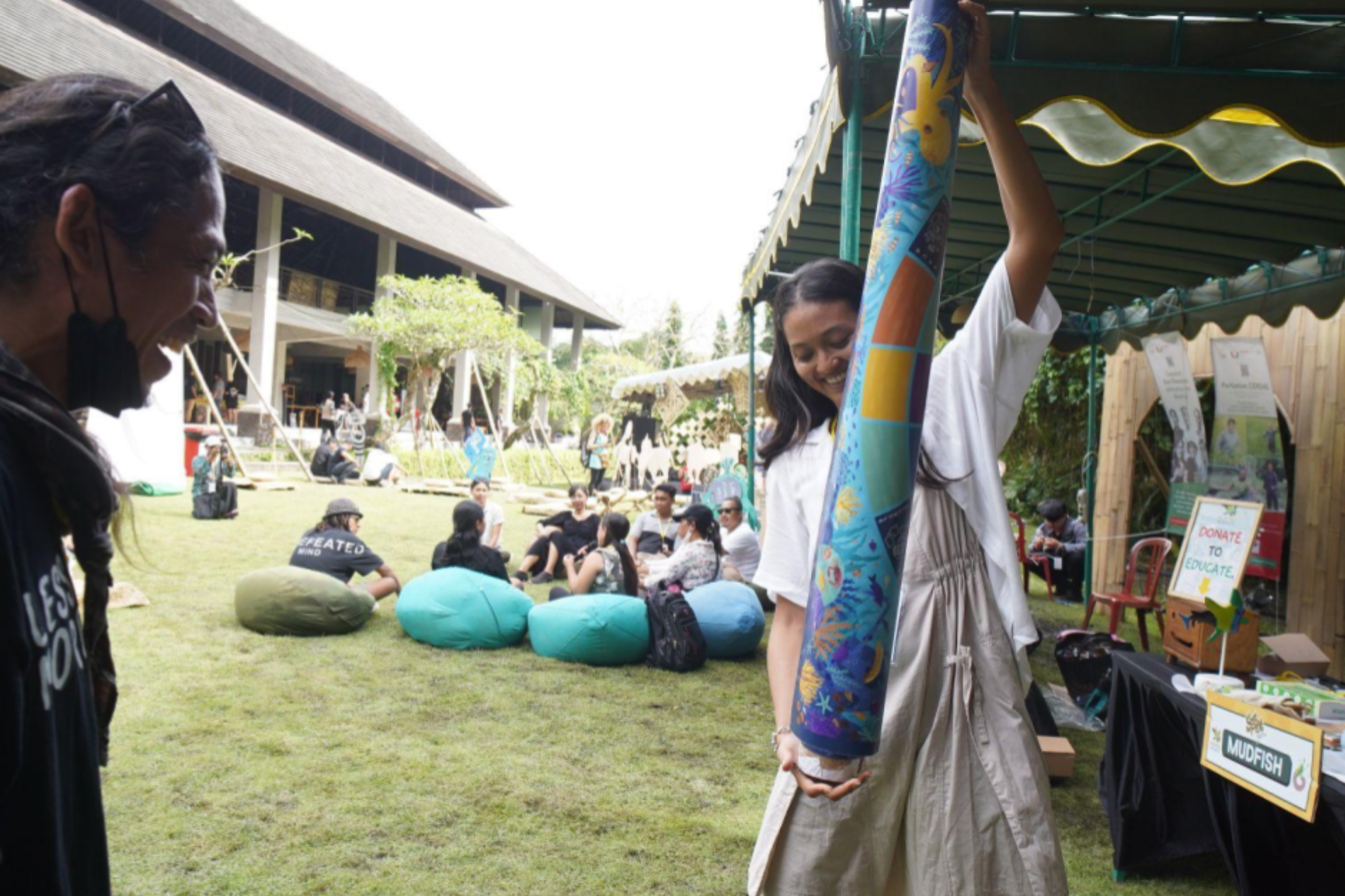
Ecogames.net joins Get The Fest 2022: A Day of Fun and Environmental Engagement
In the face of global climate challenges and the growing threat of plastic waste, events that promote sustainability and environmental awareness are crucial ways to get people together and raise awareness about both the problems we face and the solutions we can build together. Get The Fest 2022, a dynamic music festival that was powered by alternative fuel derived from plastic waste, was an awesome initiative that did just that. The ecogames.net team had a great time on the festival day hosting a booth at the festival site, the stunning Njana Tilem Museum in Mas, Ubud, Bali. Get The Fest 2022 was not just another music festival; it was a celebration of sustainability with powerful messages about addressing climate change and plastic pollution. The ecogames.net team had the privilege of participating in this dynamic event, where environmental awareness met music, activism, sharing of solutions and fun. Aside from the amazing performances, one of the highlights of the day for us was the great interest in ecogames.net’s environmental games. Many festival attendees visited our booth, eager to learn, play, and have fun while discovering the significance of eco-conscious choices. The energy and enthusiasm of the crowd were amazing! Fun with Eco-friendly Games: At the heart of our booth were a variety of eco-friendly games that engaged participants in meaningful ways. From plastic waste sorting challenges to climate action trivia, festival-goers had a blast while gaining valuable insights into sustainability and environmental responsibility. Get The Fest 2022 offered festival-goers a unique experience that blended music with eco-consciousness. People had the chance to witness firsthand the transformation of plastic waste into alternative fuel, emphasising the potential of sustainable practices in combating the plastic crisis and energy scarcity. The festival featured an impressive lineup of headlining bands that brought the stage to life. Audiences were treated to the electrifying sounds of Navicula, Jason Ranti, Iksan Skuter, Oppie Andaresta, Nugie, Cozy Republik, Ipank Hore-Hore, Made Mawut, Mad Madmen, Rhythm Rebels, Koesbilindo, and Taman Sawangan Ukulele. Each band delivered outstanding performances, creating a diverse and energetic musical experience that really resonated with the festival’s attendees. From rock to reggae, these headliners added a unique touch to the event, making Get The Fest 2022 a remarkable celebration of music and sustainability. This festival was not just about music and entertainment; it was a platform for promoting innovative solutions to environmental challenges. The ecogames.net team was thrilled to be part of an event that showcased how plastic waste can be transformed into a valuable resource, contributing to a cleaner environment and reduced carbon emissions. Get The Fest 2022 demonstrated the power of collaboration across various sectors. Government support, academic involvement, business partnerships, and community engagement all played a crucial role in making this event a success. It highlighted the potential for sustainable tourism and the importance of addressing plastic pollution. Get The Fest 2022 was more than a music festival; it was a celebration of environmental stewardship and innovation. The ecogames.net team had a fantastic time engaging with festival-goers, raising awareness about sustainability, and promoting eco-friendly practices. It was a dynamic day filled with fun, learning, and a commitment to a cleaner, greener future. We look forward to seeing you at the next Festival! #ClassroomEnvironmentGames #SchoolsEnvironmentalEducation #TeachEcoSolutions #EcoFriendlyOutdoorGames #EcoConsciousKidsGames #EnvironmentalEducationActivities #FunEcoFriendlyGames #FunEcoFriendlyActivities #HandmadeInBali #HandcraftedInBali #StorytellingGames #StrategyForChangeGames #GiantGamesforGroups #GamesAboutOceanConservation #PlasticPollutionAwareness #OceanCleanUp #FindMeInTheGardenGames #PermaculturePlay #SDGsforChangeEducation #SmallIslandsBigImpact #TeachingPlanetaryBoundaries #CommunityResilienceGames #RainforestLearning
More -

Eco-Charades: Act Out Your Eco Solutions!
In a world that increasingly demands our attention and awareness of environmental issues, finding enjoyable ways to promote eco-consciousness is a win-win. Eco Charades, the innovative game from ecogames.net, blends entertainment with environmental education. This creative and engaging miming and guessing game captivates players of all ages, making it a perfect choice for family gatherings, parties, and classroom activities. Eco Charades encourages players to dive into the world of non-verbal communication. It presents eco-themed clues that need to be guessed through gestures and expressions, fostering teamwork, creativity, and a deep appreciation for nature and the environment. With flexible gameplay options, including timed play, free play, and team-based challenges, Eco Charades can be used in various settings and group sizes. Eco Charades takes players into an imaginative journey in the natural world. You’ll mime clues related to things found in nature, the diverse creatures inhabiting our planet, activities in gardens and farms, and practical ways to reduce, reuse, and recycle waste while conserving Earth’s precious resources. This exciting game sparks meaningful discussions and encourages participants to think creatively about how we can share ideas and collectively care for the environment. Whether you’re planning a family game night, a lively party, or an engaging classroom activity, Eco Charades promises laughter and fun as players express their eco solutions through creative gestures and body language. It’s a game where entertainment aligns seamlessly with environmental education, offering both children and adults a chance to connect with nature and learn how to nurture our planet. While Eco Charades entertains and educates, it also serves as an environmental awareness booster. By engaging with eco-themed clues and actively participating in discussions about nature, conservation, and sustainability, players become more attuned to the pressing issues our planet faces. This heightened awareness can extend beyond the game, inspiring eco-friendly actions and choices in daily life. Playing Eco Charades offers a wealth of cognitive, emotional, and social benefits. Players sharpen their ability to convey ideas and concepts without using words, a crucial skill in effective communication. Enhanced body language awareness becomes a valuable tool for conveying messages, enhancing overall communication skills. As players think creatively to express complex concepts through gestures, they foster imaginative thinking. The process of recalling and interpreting a wide range of eco-themed clues enhances memory and cognitive skills. Social bonding and teamwork thrive in the collaborative atmosphere of Eco Charades, strengthening bonds among players. The game’s emphasis on laughter and positive emotions promotes a sense of well-being. Adapting to various clue categories and gameplay options enhances cognitive flexibility. Players must concentrate on interpreting and miming clues, improving concentration and focus. Above all, Eco Charades offers hours of pure entertainment and fun, making learning about the environment an enjoyable experience. Eco Charades is more than just a game; it’s a gateway to increased environmental awareness, enhanced communication skills, and a boatload of laughter and fun. With its eco-themed clues and emphasis on creative expression, this game is a delightful way to nurture our connection with nature and inspire eco-friendly actions. So, gather your friends and family, and get ready to mime your way through the wonders of our natural world! #ClassroomEnvironmentGames #SchoolsEnvironmentalEducation #TeachEcoSolutions #EcoFriendlyOutdoorGames #EcoConsciousKidsGames #EnvironmentalEducationActivities #FunEcoFriendlyGames #FunEcoFriendlyActivities #HandmadeInBali #HandcraftedInBali #StorytellingGames #StrategyForChangeGames #GiantGamesforGroups #GamesAboutOceanConservation #PlasticPollutionAwareness #OceanCleanUp #FindMeInTheGardenGames #PermaculturePlay #SDGsforChangeEducation #SmallIslandsBigImpact #TeachingPlanetaryBoundaries #CommunityResilienceGames #RainforestLearning
More -

What on Earth Am I?: The Eco-Awareness Twist on the Classic ‘Who Am I?” Game
Eco-friendly “What Am I?” guessing game offers hours of entertainment for players of all ages while encouraging environmental awareness and critical thinking. Each player wears a headband with a card displaying an image. The challenge? To figure out “What am I?” by asking only “yes” or “no” questions. Your goal is to earn three scoring badges before your fellow players, making it a race against time and wit. “What on Earth Am I?” includes a range of recognizable animals in nature and sustainable living categories, ensuring that players of all ages and backgrounds can join in the family fun and learn more about the natural world and sustainable living. If you choose to use a timer, rounds move swiftly, infusing the game with energy and putting your wit to the test. Playing “What on Earth Am I?” is not just entertaining; it’s educational. Kids, in particular, benefit from the game’s deductive reasoning actions. As they devise questions that lead to answers, they hone their critical thinking skills. The game encourages players to think strategically, fostering mental agility and problem-solving abilities. “What on Earth Am I?” immerses players in the fascinating world of animals, plants, habitats, and sustainable living. It challenges you to delve into different categories and ask questions like, “Am I a wild animal?” or “Do I have spots?” The game even delves into topics like renewable energy, sparking discussions on eco-conscious choices. “What on Earth Am I?” encourages conversations about simple actions that can help care for our planet. Whether you’re playing with your family or at school, this game offers entertainment with a purpose, aligning entertainment with eco-friendly ideals. The game includes 62 clue cards, offering a variety of eco-themed challenges. These include DIY clue cards, for including your own locally-relevant clues. Eight key question cards help guide players in asking the right questions, while 30 chips and a chip bag are used to keep score. Six elastic headbands are included as well as a comprehensive rulebook that explains several different ways you can play the game as well as some environmental awareness tips. Playing “What on Earth Am I?” comes with a wealth of benefits, both cognitive and emotional. It enhances environmental awareness by immersing players in the world of sustainability. Critical thinking gets a boost as players formulate questions and decipher answers. Memory improves as players recall information related to various categories. The game nurtures enhanced communication skills, as players interact through questions and answers. It encourages empathy and perspective-taking, fostering a deeper understanding of the planet’s interconnectedness. Social bonding occurs naturally, strengthening connections among players. Creativity and imagination flourish, particularly when it comes to acting out clues. Players enjoy a confidence boost as they successfully guess their identities. The game enriches cultural and ecological knowledge, making learning enjoyable. Most importantly, “What on Earth Am I?” delivers hours of entertainment and fun, making it an ideal choice for family gatherings, school activities, and parties. With “What on Earth Am I?” eco-consciousness and entertainment can go hand in hand. By infusing gameplay with eco-themed challenges, this game sparks environmental awareness and critical thinking while ensuring a truly delightful time for players. #ClassroomEnvironmentGames #SchoolsEnvironmentalEducation #TeachEcoSolutions #EcoFriendlyOutdoorGames #EcoConsciousKidsGames #EnvironmentalEducationActivities #FunEcoFriendlyGames #FunEcoFriendlyActivities #HandmadeInBali #HandcraftedInBali #StorytellingGames #StrategyForChangeGames #GiantGamesforGroups #GamesAboutOceanConservation #PlasticPollutionAwareness #OceanCleanUp #FindMeInTheGardenGames #PermaculturePlay #SDGsforChangeEducation #SmallIslandsBigImpact #TeachingPlanetaryBoundaries #CommunityResilienceGames #RainforestLearning
More